

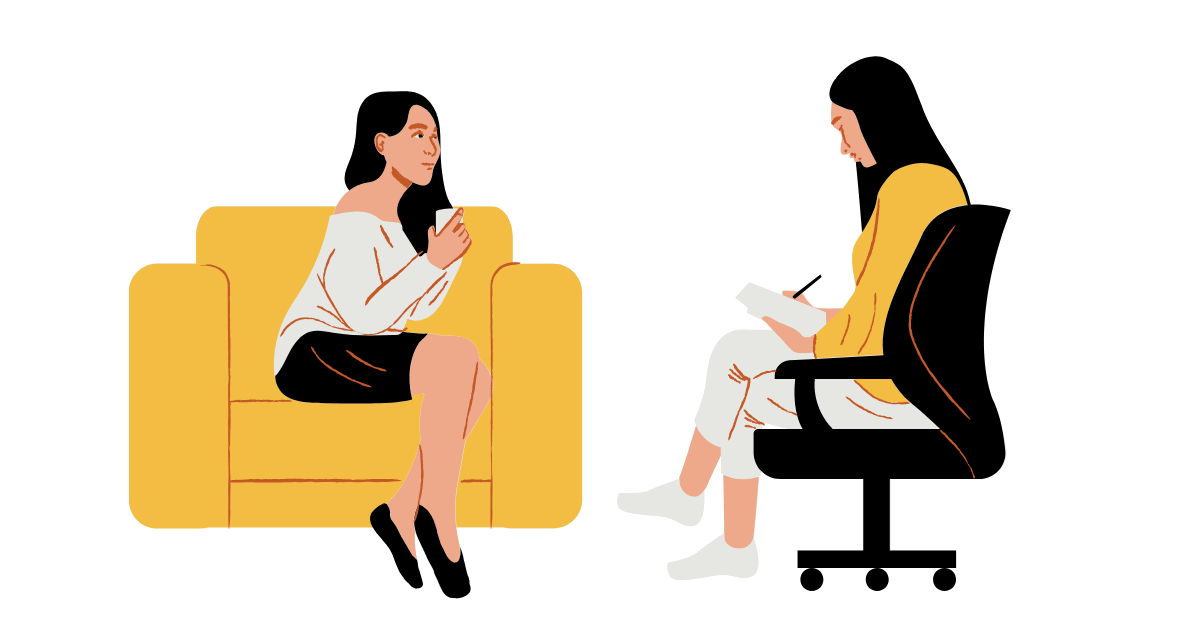
Did you ever have a conversation with a therapist, counsellor or coach and were simply handed, at the end, the discouraging, “You know, you could simply do X.”?
In my experience, handing out templates for behaviour not only leaves the other person feeling dumb, but also feeling like there is something morally wrong with them. If the solution is that simple, why can’t I just do it? Why am I so stubborn in my “wrongness”?
So if you think you have a behaviour that’s bothering you, and despite “knowing what to do” you don’t do it, I want to persuade you of something different today.
You aren’t applying the cookie-cutter advice because you are an intelligent creature thriving on pattern recognition, that knows, based on past experience, that the template advice may have unwanted side effects, and that, in fact, to achieve the results you want, at this point in time, you don’t have the solution. It’s not like you are a stubborn, morally bankrupt mule, you simply don’t have the complete answer.
Not convinced?
Thought so.
Let’s take an everyday situation, with a very simple solution, in this case, being able to say no to a friend because you are tired and can’t spend another hour over the phone after work, no matter how sad your friend is.
Easy peasy, right?
Let’s give it a go.
Why is it so difficult to say no
Annie is a 35-year-old lawyer. She works long hours but is generally happy with her career. What she is not happy about is her friendship with Suzanne. They’ve both met in college, and ever since they’ve been inseparable despite their paths being so different. Suzanne quit law school and decided to marry Harry, with whom she has 2 children. Harry is himself a successful lawyer, and she is a homemaker. However, they’ve always fought a lot, and Annie was the place where Suzanne went to vent, to complain, and to eventually return back to her situation.
Annie is already tired from work, and when she sees her friend’s name on her phone screen, her stomach is in knots. She knows it’s going to be another 1-hour conversation, at the very best, about how uncaring Harry is, and about how demeaning he is. What makes the situation even more complicated is that, at some point in her life, Annie herself was in a similar situation. In a relationship where she needed a lot of time with her friends to vent, to just let it out. In a way, that’s one of the ways Annie and Suzanne connected, but Annie left that relationship, and now she feels indebted to Suzanne to hear her as she heard her, yet at the same time she is resentful for using her free time, listening to her friend, vent about a problem that may never end, unless her friend decides so.
If we simply tell Annie, or Annie ends up telling herself this after a brief conversation with ChatGPT, that she simply needs to tell Suzanne to stop calling because she is tired after work and can’t deal with her relationship drama anymore, a couple of things may happen, especially if Annie feels incredibly uncomfortable doing this.
Let’s run a simulation and see what might happen.
Implementing the “good will advice”
Let’s remember the overall scenario. Most of their friendship is built on the way they speak about their relationships, mostly their negative experiences. Because Annie was also in a somewhat similar situation, there is some mutuality that Suzanne still expects.
Annie’s friend may also feel betrayed and like something has shifted and now is completely isolated.
Now you could make the argument that for Annie, Suzanne mentioning she wants to break off their friendship may be an easy way out, but for Annie, there’s years of investment in this relationship, and the guilt around the fact that, at some point in time, she was the one crying on the phone.
To make matters worse, Annie may feel bad for Suzanne for not having a financial safety net. Unlike her, she doesn’t work and is completely dependent on her husband’s income. Her way out of the relationship would cost a lot more, both financially and emotionally, especially since kids are involved.
How the cookie-cutter advice can make things worse:
Annie might feel very guilty, especially after being thrown in the face the fact that she was in a somewhat similar situation not so long ago, and the fact that her friend is in a more delicate situation. Keeping in mind that Annie’s problem is that she has far more compassion for others than for herself, her friend’s suffering and accusations of betrayal might make her feel incredibly guilty and selfish.
She might end up apologising herself for not being understanding enough, and might spend the same time on the phone, if not more, to prove to her friend that she is a good person.
Well, we’ve done it. We’ve given the “good glossy magazine advice.”
What happens when you don’t have the solution but rely on “good advice”
In reality, Annie has probably run through this scenario at an unconscious or conscious level herself, hence the resistance in placing the boundary.
In other words, when we force-feed people advice, or ourselves, we bypass our own knowledge and we gaslight ourselves with “simple wisdom,” which is basically just lazy advice.
So what can we do instead, when we are faced with a situation like this, instead of relying on a template that might not work?
The “problem” is the solution
People don’t just wake up one day and start doing things that make them more tired and resentful in relationships. Instead, what they might be using are solutions that work, but slowly damage them.
Think about dirty fuel. It makes the car work, but in the long term, it ruins the engine.
In this scenario, the solution that creates discomfort is accommodation of her friend’s needs to her own detriment. If we remove the solution, and we no longer accommodate those needs, Annie is still left feeling bad, but for a different reason, because the values that prevented her from interacting with people differently will stay the same, before and after setting a boundary.
So what is the solution?
The solution lies in helping Annie understand what makes her have loyalties against loyalty to herself.
Why has she maintained a friendship over the years based only on shared relationship troubles?
What’s her idea of friendship, loyalty and good behaviour?
Can she protect herself, all while being aligned with herself, if so, how?
The way we relate to others, the way we pick others to be friends or romantic partners is based on a set of internal models created in childhood. These internal models are based on the relationship we had with our parents. Unless we have a good understanding of why we developed certain views about ourselves, about others and how we can get love from others, each time we start applying advice from a different paradigm, it feels strange, even nauseous to us. And then we go back to what feels comfortable.
What can Annie really do about it
Based on the internal models she internalized as a child, Annie has a set of values about herself, others and how love and safety are acquired.
So if applying advice from a different paradigm will only make her feel unhappy with herself, what can we do?
Fortunately, neuroplasticity is on our side. The brain can change its internal models if it receives a different relational experience. In the case of Annie, her relational experience is built around friendship as a transaction. Meaning, one must stay loyal, beyond comfort, to someone else, and one cannot communicate discomfort without being put down or shunned.
In a therapeutic relationship, either with a psychologist, therapist or a coach, Annie could learn not only about her early patterns and why she feels the way she feels, but she’ll also experience connection in a different way. In a way, the therapeutic relationship is a training ground, where Annie can experiment with showing up as herself, with her needs, being seen, without putting the other person first, and risking losing the other person once she can no longer compromise.
The combination between psychoeducation, a new relational experience and tools she can use in other relationships as well, will slowly upgrade her internal working model, so she can expect friendship on equal grounds and not feel bad when placing a boundary. And only then, good advice actually feels like good advice, not as someone telling you why you didn’t escape the situation by helicopter when you don’t know how to drive a car.